
Stem Cell Program Research | Overview
Every day, the medical staff and researchers at Boston Children's Hospital witness the devastating effects of diseases like leukemia, diabetes, sickle cell anemia and heart disease on the lives of the children they treat. Every day, we see very small patients fighting very large battles just to stay alive. We see toddlers spending their days in blood transfusion units instead of on playgrounds, and teenagers living with a restrictive regimen of treatments and the knowledge that their promise of a future is uncertain. For them, and for their families, the hope is very simple: Please find a cure for our disease.
Our patients’ health and a future filled with promise are what drive the researchers, faculty and staff of the Stem Cell Program at Boston Children’s Hospital.
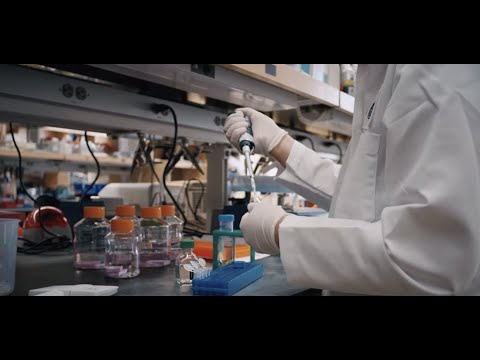
The Stem Cell Program at Boston Children’s launched in 2004
Leonard Zon, MD, and George Q. Daley, MD, PhD, launched the Stem Cell Program at Boston Children’s in 2004. Stem cell research holds great promise for advances in science, medicine, and in the lives of children and adults living with serious diseases.
Our mission
This program’s sole mission is to explore, understand, and translate the promise of stem cells into effective clinical therapies and treatments. Its leaders have developed a three-pronged strategy to fulfill this charge:
- Develop basic methods for creating customized stem cells that can be turned into any tissue in the body.
- Apply those methods to the diseases most likely to yield the first breakthrough treatments. Blood diseases such as leukemia are likely to be first because the science is furthest along for them and the method for delivering the cells, blood stem cell transplantation, is well established. These disorders are the Program’s primary focus, but major progress in its iPS cell research has enabled expansion to other diseases more rapidly than anticipated. Intensive research now focuses on solid cancers, liver diseases, and rare conditions that shed light on more common ones.
- Make iPS cells and other technologies developed here available to colleagues worldwide and so speed progress on a vast array of disorders.
What are stem cells?
Stem cells are single cells with two unique qualities: they can make endless copies of themselves, and they can mature into a variety of specialized cells. These qualities make stem cells promising tools in medicine, allowing patients to receive needed cells or tissues, or have diseased cells or tissues replaced with healthy ones. Grown in the lab, genetically repaired if needed, and coaxed to become a specific tissue, stem cells allow doctors to patch a scarred heart, reawaken damaged nerves or reboot an immune system incapable of fighting infection. Stem cells are invaluable to scientists in understanding human disease.
Equity and inclusion
The Stem Cell Program at Boston Children’s Hospital is committed to upholding Boston Children’s Declaration on Equity, Diversity, and Inclusivity. We are committed to encouraging and growing the program’s diversity and inclusion across race, gender, age, religion, identity and experience within our program. We are steadfast in building our diversity and cultivating researchers and scientists who advocate for our mission and are models to the hospital and research community.